This Porto Katsiki safety guide starts with one principle: treat the site as an exposed natural beach rather than a serviced resort. The main hazards are the cliff and any restricted zones, heat and dehydration, the stair climb, hot or unstable pebbles, changing shore break and leaving too late for a clear return. Most problems are reduced by assessing conditions from above, carrying less and leaving before fatigue sets in.
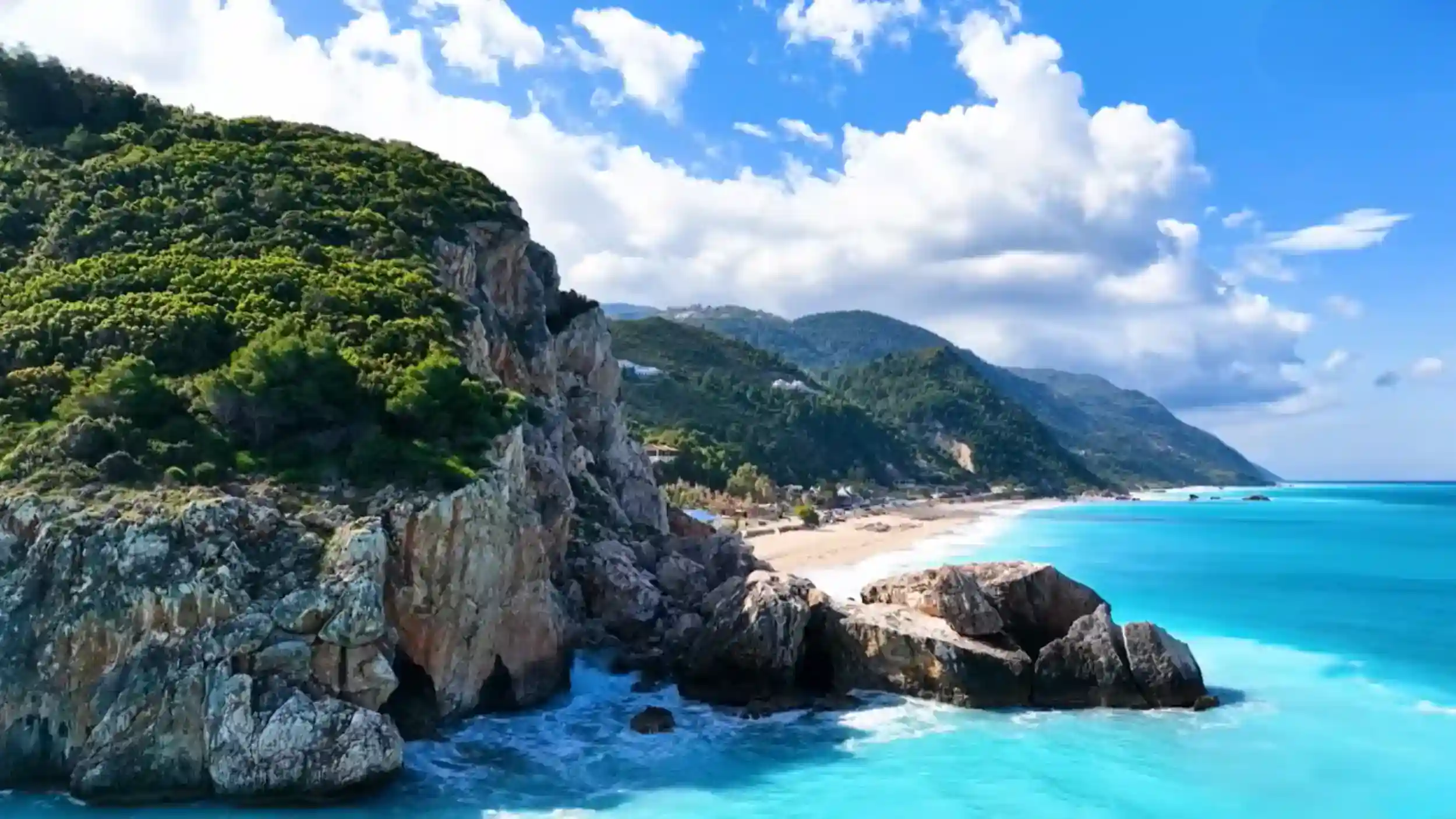
Porto Katsiki safety starts before unloading the car
Look at the beach and sea from the upper area first. If waves are breaking hard onto the stones, a thunderstorm is approaching, a member of the group is already unwell or the access looks beyond someone’s mobility, keep the visit at viewpoint level. Do not carry a full beach setup down and then feel committed to staying.
Respect the cliff and all warning signs
Porto Katsiki exists below a high natural cliff. Obey barriers, warning signs and any instructions in place. Do not climb the cliff, enter a closed section or sit beneath visibly loose material simply to find shade. Conditions and restricted areas can change after weather or geological events, so current on-site information outranks an old photograph.
Stair safety starts with footwear
Wear secured sandals or trainers with grip. Keep one hand free for the railing and carry bags that do not obstruct your view of the next step. Loose flip-flops, hard coolers and several dangling bags turn an ordinary staircase into a balance problem.
The descent is only half the task. Reserve water and energy for climbing back after swimming. The Porto Katsiki stairs guide covers access in detail.
Heat and dehydration
The pale cliff and pebbles reflect strong summer light, while shade should not be assumed. Bring water from the start and drink before thirst becomes intense. Headache, dizziness, nausea, confusion or unusual weakness are reasons to stop exertion, move to a cooler place and seek help if symptoms do not improve.
Sun protection is more than sunscreen
- Use a hat and clothing that covers exposed skin.
- Reapply suitable sunscreen after swimming and according to its instructions.
- Bring compact shade that can be carried safely back up.
- Avoid making the stair climb at the hottest part of the day when possible.
- Protect children before descending rather than trying to organize everything on hot pebbles.
Pebbles and the waterline
Stones can become hot, shift underfoot and move in the backwash. Water shoes help many visitors, but they do not make strong waves safe. Keep glass off the beach and choose a sitting area above the normal wash line so one larger wave does not soak bags or pull belongings toward the sea.
Swimming safety belongs in a separate decision
Warm, turquoise water can still have forceful shore break. Watch several wave sets at beach level and plan the exit before entering. If adults are being knocked down or struggling to leave the water, do not swim. Read the dedicated waves and swimming conditions guide for the full assessment.
Children need a shorter safety margin
Keep children out of active shore break and within immediate reach near the water. Do not use inflatables as flotation safety equipment. Leave while they still have energy for the stairs; a tired child and several bags create avoidable risk on the climb.
Weather that should change the plan
Do not descend during a thunderstorm or intense rain. The outdoor staircase and exposed coast are poor places to wait out severe weather. Strong wind also affects umbrellas, inflatables and loose equipment. Check the hourly forecast before leaving, then respond to what is visible on arrival.
Belongings and the parked car
Carry only what you need and do not leave valuables visible inside the vehicle. Keep keys and phone protected from water without placing them in an unattended bag beside the wash line. Photographing the parking location can help when several sections are in use.
Leaving before dark
Begin packing with enough natural light for an unhurried climb and drive. A phone light is a backup, not a reason to plan the staircase after dark. Put footwear on while seated, organize rubbish and finish some water before starting upward.
If someone needs urgent help
Call 112, the European emergency number, for a serious injury, medical emergency or person in danger. State Porto Katsiki Beach, whether the person is at beach or clifftop level, and what access rescuers may need. Do not enter dangerous water or unstable cliff areas and create another casualty.
Before descending checklist
- Sea assessed from above and again at shore level
- No active storm or unsafe access warning
- Secure footwear and one free hand
- Enough water for the visit and return climb
- Shade and sun protection carried
- Children and mobility needs honestly assessed
- Departure planned before fatigue and darkness
Porto Katsiki safety FAQ
Is Porto Katsiki dangerous?
It is a natural cliff beach with stairs and exposed sea conditions. Conservative choices and respect for current warnings reduce risk.
Is it safe for children?
It can suit older children comfortable with stairs and pebbles. Babies, toddlers and rough-sea days require a more cautious decision.
Can I sit against the cliff for shade?
Do not enter restricted areas or choose a place beneath loose-looking cliff material. Follow all signs and barriers.
Are water shoes useful?
Yes for hot and shifting pebbles, but they do not protect against strong shore break.
What is the emergency number?
Call 112 for a serious emergency in Greece.
Plan a safer Porto Katsiki visit
Good Porto Katsiki safety planning begins before the drive. Check the Porto Katsiki weather guide, confirm the latest access hours and review parking arrangements. Families should also read the practical guide to visiting Porto Katsiki with children. For a less demanding day, compare the best times to visit and nearby alternatives in the beaches near Porto Katsiki guide.
The safest Porto Katsiki day is rarely the most ambitious one. Inspect first, carry less, swim only when the exit is controlled and leave with enough energy and light for the climb.