Porto Katsiki waves can develop quickly because this is an exposed west-coast beach where clear sky and warm water can coincide with difficult shore break. Decide whether to swim by watching the moving sea at beach level—not by water color, air temperature or photographs taken on another day. Porto Katsiki waves should always be assessed from beach level before anyone enters. If waves are knocking people over at the shoreline or making exits uncontrolled, the safest choice is not to enter.
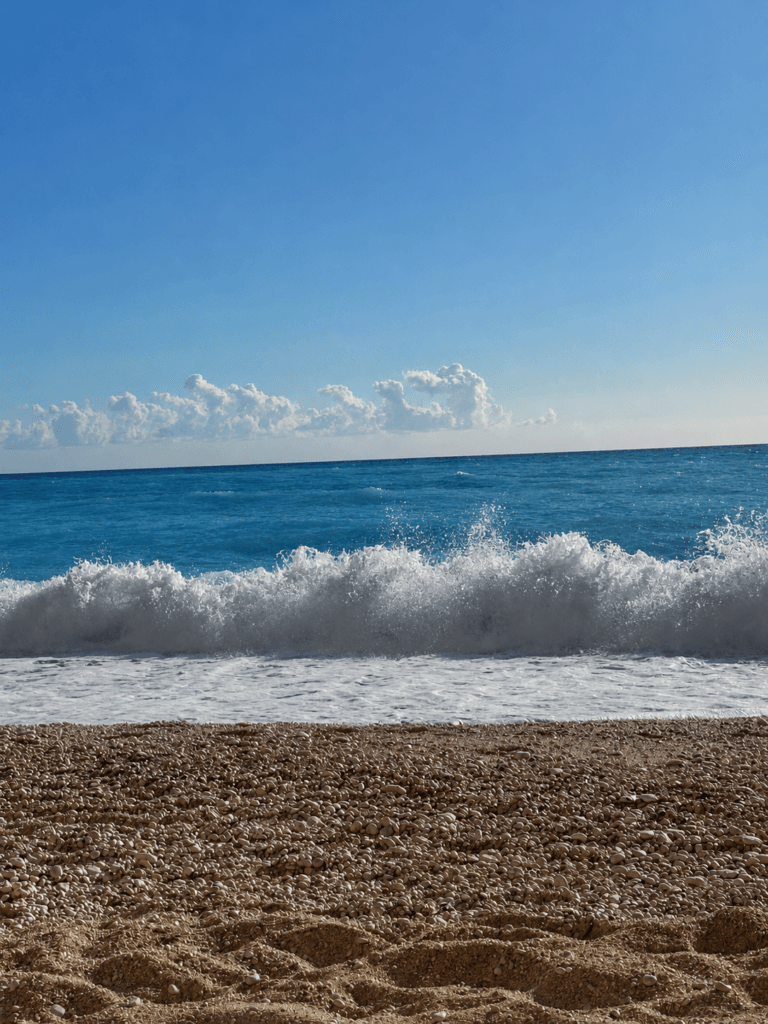
Why Porto Katsiki waves develop
The beach faces the open Ionian rather than a sheltered bay. Wind-generated waves and swell can reach the pebbled shore with little protection from headlands. The result varies from a gentle moving surface to breaking waves that make standing, entry and exit difficult.
Look from above, decide from below
The clifftop is useful for seeing broad whitecaps and wave lines, but height makes individual breakers appear smaller. Reassess after descending. Stand back from the water and watch several complete sets, including the largest wave and the pull of water returning down the pebbles.
Signs the shore break is too strong
- Adults are repeatedly knocked down while entering or leaving.
- Waves break directly onto the pebbles rather than spilling gently farther out.
- Backwash moves stones strongly around feet and removes stable footing.
- Swimmers time exits unsuccessfully or need help reaching dry beach.
- Children cannot remain safely above the wash zone.
- Flags, instructions or local safety personnel advise against entering.
One warning sign is enough to reconsider. Swimming ability in deep water does not prevent an injury during a badly timed exit onto stones.
Shore break is different from swimming offshore
A person may feel comfortable beyond the breaking waves and still be unable to return safely through them. The transition between water and beach is often the hardest part. Do not swim out unless you already have a controlled exit plan for the conditions you can see.
Entering when conditions are manageable
- Choose a section without rocks or concentrated breaking water.
- Secure footwear and remove loose items before approaching the wash.
- Watch enough sets to identify the calmer interval.
- Enter facing the water so the next wave is visible.
- Stay within a depth and distance that allow an immediate return.
This is not a technique for making dangerous surf safe. If timing the waves feels essential just to remain standing, conditions are already beyond a relaxed beach swim.
Exiting without turning your back too early
Approach slowly and keep watching incoming waves. Wait for a manageable interval, move with control and remain facing the sea until both feet are secure above the active wash. Do not stop at the point where backwash is moving pebbles underfoot.
Children and non-swimmers
A transparent shoreline is not automatically child-friendly. When waves are present, keep young children out of the wash zone rather than allowing ankle-deep play that can become knee-deep in one breaker. An adult should remain within immediate reach at all times.
Non-swimmers should not rely on inflatables. Wind and moving water can separate a person from shore quickly, and an inflatable provides no safe way through breaking waves.
Wind forecast versus wave forecast
Local wind explains only part of the surface. Swell can arrive from weather farther away, while a windy moment does not always produce large breakers immediately. Check both an hourly weather forecast and a marine or wave forecast, then let visible shore conditions overrule the screen.
The Porto Katsiki weather guide explains which forecast fields matter. Sea temperature is covered separately because warm water does not imply safe water.
Can conditions change during the day?
Yes. Wind and wave energy can build, shift or ease. Check the exit repeatedly rather than assuming the route used in the morning will feel the same later. If the sea is worsening, leave before every swimmer is tired.
What to do instead of swimming
A rough day can still support a viewpoint visit and photography from a safe distance. Do not stand close to the wash for dramatic images, and never climb onto unstable rocks. If swimming is essential, choose another beach based on that day’s conditions rather than assuming every west-coast alternative will be calmer.
Emergency judgment
If a swimmer is in difficulty, alert any safety personnel and call the European emergency number 112. Entering rough water without rescue training can create a second casualty. Give clear location information and keep visual contact from a safe position.
Swimming-conditions checklist
- Watch multiple wave sets from beach level.
- Assess entry and exit, not only the water beyond the breakers.
- Keep children outside the wash zone when waves are active.
- Do not depend on inflatables.
- Obey flags, signs and local instructions when present.
- Leave before fatigue or worsening conditions complicate the exit.
Porto Katsiki waves FAQ
Is Porto Katsiki always wavy?
No. It can be calm, but its exposed position makes waves and swell an important same-day check.
Are morning conditions always calmer?
No rule guarantees this. Morning is often cooler and less busy, but visible sea state and the current forecast decide.
Can strong swimmers enter when waves are large?
Swimming strength does not remove the risk of shore-break injury or an uncontrolled exit. If entry or exit is doubtful, do not swim.
Does turquoise water mean safe swimming?
No. Color is created by light, depth and pale material; it is not a safety indicator.
Who decides whether the sea is safe?
Follow any official flags, signs and on-site instructions. In their absence, each visitor must make a conservative decision from current conditions and personal ability.
The correct Porto Katsiki swim begins with the exit. If you cannot describe how every person in the group will return through the shore break under control, keep the day on the beach rather than in the water.