Home > Travel Guide > Weather > Porto Katsiki in Winter
Porto Katsiki in winter is an exposed coastal viewpoint, not a normal beach attraction. The road, upper area, stairs, and cliff may be affected by rain, wind, maintenance, or temporary restrictions; summer parking and food services should be treated as unavailable unless confirmed. Visit only in a stable daylight weather window and be willing to turn around.
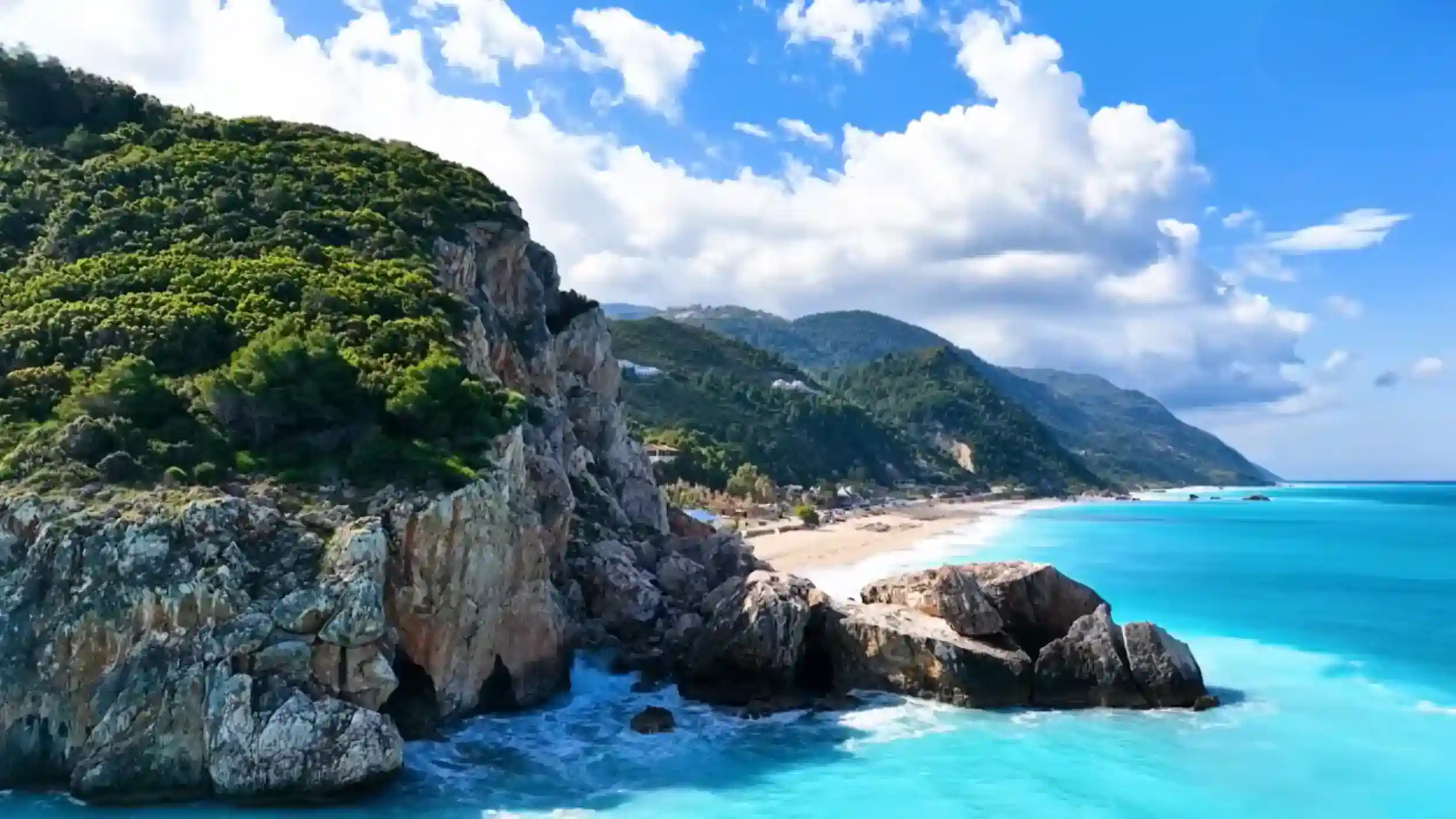
Is Porto Katsiki in winter open to visitors?
There is no useful permanent yes-or-no answer for every winter day. The public road or viewpoint may be accessible while stairs or a final area is restricted. Severe weather, maintenance, fallen material, rockfall risk, or municipal traffic measures can change conditions.
Before driving, obtain current information from reliable local sources such as:
- municipal and police announcements;
- the accommodation host;
- a local rental or transfer company familiar with the route;
- physical road signs and barriers;
- the current weather and recent-weather record.
A map route proves only that a road exists in its database. It does not prove the road or stairs are safe today.
What Porto Katsiki in winter really means
December
The sea is cooling but can remain warmer than late winter. Daylight is short, visitor services are limited, and changing weather controls the visit.
January
Landscape and storm-watching from a safe distance become the primary experience. Do not approach the cliff during strong wind or heavy rain simply because the road is quiet.
February
The sea is usually at or near its coldest annual phase. Brighter days can occur, but winter road, stair, and weather checks remain essential.
These are seasonal tendencies, not forecasts. A calm January day can be more suitable than a stormy December afternoon.
Sea temperature at Porto Katsiki in winter
Historical Lefkada sea-surface climatology places winter broadly from about 14°C in the coldest phase to around 18°C in early winter. Wind, waves, air temperature, and the exposed return route make the water feel more demanding than a number suggests.
For most visitors, Porto Katsiki is not a winter swimming destination. Cold-water swimmers need appropriate experience, company, equipment, health considerations, and a safe exit plan beyond the scope of a general travel guide.
Why recent weather matters at Porto Katsiki in winter
The current sky is only part of the decision. Heavy rain in the previous day can leave wet roads, runoff, loose material, or slippery steps after the shower ends. Strong swell can persist after local wind eases.
Ask:
- Has there been heavy rain or a storm recently?
- Are waves still reaching far up the shore?
- Is strong wind forecast for the exposed coast?
- Will the entire drive and return occur in daylight?
- Has any local authority announced works or restrictions?
If one answer creates uncertainty, choose a town, village, or inland plan instead.
Do not use storms as a viewing attraction
Large winter waves can look dramatic from photographs, but cliffs, spray, gusts, wet surfaces, and debris make close observation hazardous. Remain in an authorized stable area, far from edges and wave reach.
Never stand at the waterline to photograph a large set, climb a barrier, or park where an urgent turn becomes difficult. A viewpoint visit should end before conditions deteriorate, not after the first wave reaches the equipment.
The road to Porto Katsiki in winter
Use the established route and avoid navigation shortcuts along minor or unpaved roads. Drive slowly on shaded bends and give space to local vehicles, maintenance work, animals, or fallen material.
Refuel before entering the remote southwest route. Keep a charged phone, offline map, warm clothing, water, and the assistance number. Tell someone the route when travelling alone, but do not use that message as permission to continue into unsuitable conditions.
Parking when the summer operation is absent
Porto Katsiki Beach has no entrance fee. Winter parking operations and charges should not be assumed from high season. Follow current signs and any onsite instruction.
An empty parking area is not evidence that every surface is available or stable. Avoid soft ground, runoff channels, gates, turning spaces, and any position that obstructs another vehicle or emergency access.
Should you descend the stairs?
Only if access is open, the steps are dry and stable enough, wind is manageable, there is ample daylight, and the shore has a safe walking zone. Obey every barrier and warning.
The beach is optional. The upper view provides the main winter experience. Descending adds:
- wet or shaded steps;
- possible loose material;
- exposure to wind and spray;
- an isolated shore;
- a climb after cooling down;
- less time before darkness.
Turning back at the top is good judgement, not an incomplete visit.
Winter cliff and rockfall awareness
Stay out of restricted areas and do not shelter directly beneath the cliff. Rain, freeze-thaw cycles elsewhere in the landscape, wind, and erosion can contribute to loose material; a visitor cannot assess stability by looking upward for a few seconds.
Keep distance from fresh debris, cracks, or active runoff. Do not move a barrier or walk around a closure to reach an empty section.
The best time to see Porto Katsiki in winter
Late morning
Usually the strongest option: full daylight, more time for the return, and a chance for shaded road or stair surfaces to improve after a cold night.
Midday
Best light for the water colour and the warmest part of the day. Still verify wind and incoming weather.
Late afternoon
Use only for a short viewpoint visit close to the route and with a generous return margin. Winter sunset and darkness arrive too early for an improvised beach descent.
Avoid the first visit to the remote road after dark.
Winter photography
Winter gives Porto Katsiki a different visual language: low sun, fast-moving cloud, dark water, wet rock, and occasional clear air after a front. The goal is not to force a summer-blue image.
- Use a weather-sealed bag or cover.
- Carry a lens cloth for rain and spray.
- Expose for the pale cliff to preserve detail.
- Use a fast enough shutter in wind.
- Keep tripod legs and bags away from paths and edges.
- Photograph from public stable ground.
Leave before the safe window closes. Winter light can disappear faster than a photographer expects under incoming cloud.
What to wear and carry
- Grippy, closed footwear.
- Waterproof and windproof outer layer.
- Warm dry clothing.
- Water and food; assume no vendor.
- Charged phone and offline route.
- Small first-aid kit and personal medication.
- Torch for unexpected delay, not planned night access.
- Car assistance and emergency contact details.
Beach sandals and a summer towel are not a winter access plan.
Food, accommodation, and fuel
Many visitor-oriented businesses operate seasonally. Confirm accommodation heating and check-in, restaurant opening, grocery availability, and fuel needs before driving south.
Do not choose a specific lunch destination from a summer list and assume it will be open. Carry a basic snack and use Lefkada Town, Vasiliki, or another confirmed centre for dependable planning.
Solo winter visits
Quiet can become isolation. Travel in daylight, share the route and expected return, keep the vehicle reliable, and remain within phone coverage where possible. Avoid swimming alone or descending when no other access user is present and conditions are uncertain.
If the road, stairs, or weather feels different from the information received, the direct observation wins: turn around.
A realistic Porto Katsiki in winter visit
- Check current road notices, recent weather, wind, swell, and daylight.
- Confirm fuel and a nearby open meal or return plan.
- Drive the established route in late morning.
- Stop only at authorized safe locations.
- Use the upper viewpoint if open and stable.
- Descend only if every access condition is favourable.
- Leave well before sunset.
- Use Athani, Vasiliki, or Lefkada Town only where current services are confirmed.
The successful version may last twenty minutes at the viewpoint.
Better winter alternatives
Lefkada Town
Walking, cafés, waterfront, and cultural sites with individually verified hours. Better during uncertain coast weather.
Inland villages
Useful on stable days, but mountain weather and roads require their own checks.
Northern and eastern coast
Closer to services and mainland access. Choose a safe road-level walk rather than a remote cliff descent.
Accommodation day
Heavy rain or strong wind is a valid reason to stay in. No viewpoint justifies ignoring an official weather warning.
Who should visit in winter?
- Repeat visitors interested in landscape rather than swimming.
- Photographers who can work safely in changing weather.
- Road travellers with flexible timing and local information.
- People comfortable with minimal visitor services.
It is a poor fit for travellers expecting warm water, boat trips, open beach facilities, reliable public transport, or a guaranteed stair descent.
Porto Katsiki in winter mistakes to avoid
- Assuming “open on maps” means safe access.
- Driving after recent severe weather without local confirmation.
- Approaching cliff edges in strong wind.
- Descending wet stairs near sunset.
- Relying on summer restaurants or parking operations.
- Entering the sea because the beach is empty.
- Using a navigation shortcut on an unfamiliar minor road.
- Continuing because the drive has already taken time.
Porto Katsiki in Winter FAQ
Can you visit in winter?
Possibly, during a stable daylight window with confirmed road and access conditions. Temporary restrictions can apply.
Is the beach open?
The upper area, stairs, and shore may not share the same access status. Obey current barriers and local instructions.
Can you swim?
The water is cold, broadly around 14–18°C across winter climatology, and the exposed sea may be rough. It is not an ordinary holiday swim.
Is parking free?
Do not assume any seasonal parking arrangement. Follow current signs; beach access itself has no admission fee.
Are restaurants open?
Some island restaurants operate year-round, but southwest visitor businesses may be seasonal. Confirm the exact place and day.
Is winter good for photography?
It can be excellent for dramatic light and cloud, provided wind, rain, roads, and cliff safety remain within a conservative plan.
What time should I go?
Late morning or midday on a stable day, leaving a large daylight margin for the return.
Winter’s answer is sometimes no
A good winter Porto Katsiki visit begins with the possibility that it will not happen. Confirm the road, use the upper view, and leave before the weather closes. The coast is most powerful in winter precisely when it demands the greatest distance and restraint.
For official island context before seeing Porto Katsiki in winter, consult Visit Greece’s Lefkada overview.