This Lefkada Town guide explains why Lefkada Town is the island’s best place for an unhurried urban day: narrow lanes, small squares, Ionian churches, museums, cafés and a lagoon on the doorstep. It is also the first town you reach after crossing from the mainland. Park once, explore on foot and resist the temptation to treat the capital as only a fuel-and-supermarket stop.
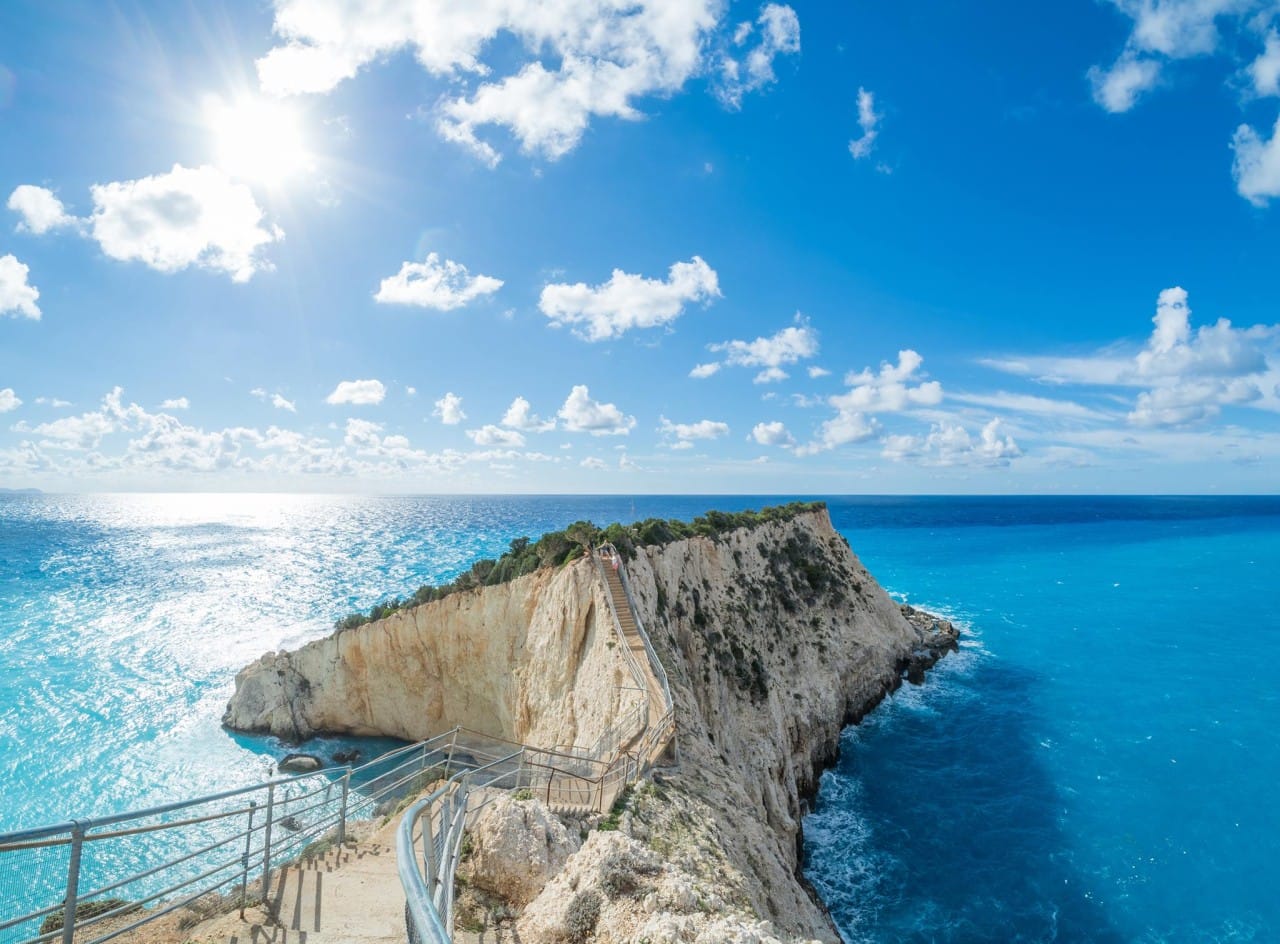
Lefkada Town guide: understand the capital before walking
The historic centre is compact, but its street plan is more interesting than a simple grid. The regional architecture guide describes a medieval layout organised around the main square, Agios Spyridon and the shopping street. Secondary lanes radiate towards small squares and churches, producing a pattern compared with a fish skeleton.
This makes wandering productive. Start near the pedestrian centre, follow one lane to a church or square, then return by another. The waterfront and marina help with orientation, while the lagoon marks the town’s northern and western edge.
Lefkada Town guide to a one-day walking route
Morning: lanes, market street and churches
Begin before the heat and delivery traffic build. Walk the main shopping street, then turn into the side lanes rather than moving straight from café to café. Agios Spyridon stands by the central square; the municipality dates it to 1685 and notes its Venetian-influenced form, carved iconostasis and painted icons. Agios Minas, at the end of the pedestrian street, is also known for its carved iconostasis and Ionian-school works.
Churches are active places of worship, not simply interiors for photography. Dress respectfully, lower your voice and skip a visit during a service unless attending appropriately.
Late morning: choose one museum
The Archaeological Museum is the best match for travellers curious about Nidri, ancient Nirikos and Wilhelm Dörpfeld’s research. Its collection ranges from prehistoric material to the Roman period. The Angelos Sikelianos Museum offers a different experience inside the poet’s former home, using manuscripts, objects, clothing, recordings and correspondence to connect his work with his life.
Do not try to fit every collection into a single beach-weather afternoon. Check the official opening hours on the day, as schedules and admission arrangements can change.
Afternoon: waterfront and a long lunch
After the centre, move towards the water for lunch or coffee. The town’s appeal is not a single landmark but the change in texture—from enclosed lanes to open marina and lagoon views. In high summer, use the hottest hours for a shaded meal or museum rather than crossing exposed waterfront paving repeatedly.
Evening: lagoon light
The lagoon is part of an internationally important wetland protected under the Ramsar Convention and the Natura 2000 network. Walk or cycle only on established routes, keep away from nesting or feeding birds and never enter the fish-farm structures. Binoculars are more useful than approaching wildlife for a phone photograph.
Lefkada Town guide to its distinctive houses
Earthquakes shaped the town’s building tradition. Ground floors often used stone while upper levels relied on lighter timber framing; painted metal sheeting later helped keep the upper structure light. The result is modest in scale, colourful and distinctly Lefkadian. Look for timber proportions, projecting balconies and corrugated surfaces rather than expecting the heavy stone mansions seen elsewhere in the Ionian.
The architecture guide explains that the system was designed so the lighter wooden structure could remain standing even if an exterior masonry wall failed. This is living engineering history, not decorative imitation.
Lefkada Town guide to Agia Mavra Castle
The fortress stands near the island entrance beside the lagoon. Its first form was built around 1300 by the Frankish ruler John Orsini. For centuries it defended the capital; during Ottoman rule, the settlement of Agia Mavra occupied the fortified area. The Venetians moved the capital to the present town in 1684.
Restoration and access arrangements can affect a visit, so check current official information rather than assuming every interior area is open. Even when entry is limited, the castle’s position explains why Lefkada Town developed where it did.
Lefkada Town guide to convenient parking
Use a legal space outside the tightest historic lanes and finish the journey on foot. Circling for a doorway space wastes time and puts you among pedestrians, scooters and deliveries. In summer evenings, arrive before the dinner rush or accept a longer walk from the car.
- Confirm signs and restrictions where you park; do not rely on another car’s example.
- Never block a resident’s entrance, rubbish collection point or narrow junction.
- Keep valuables and luggage out of sight.
- If visiting immediately after arrival on the island, avoid leaving a fully packed vehicle unattended for hours.
Lefkada Town guide to choosing where to eat
The central square, pedestrian lanes, waterfront and marina each have a different rhythm. Choose by mood rather than assuming the most visible table represents the town. Read menus first, ask the price of fish sold by weight and look one street back when the waterfront is full. A bakery breakfast, shaded lunch and late square-side drink often reveal more of local daily life than one elaborate meal.
Lefkada Town guide: should you stay here?
The capital is a strong base for short trips, travellers who enjoy evening choice and anyone wanting easy access to the mainland. It is less convenient when every day is centred on the far south or southwest coast. Confirm parking before booking in the old centre; a charming lane can be excellent for walking and awkward for unloading luggage.
For an island-wide decision, compare how many days to spend in Lefkada and the driving guide.
Three worthwhile extensions
- Gyra and Ammoglossa: continue around the lagoon towards the long narrow coastal strip near the castle.
- Agios Ioannis: add a beach or windy-coast walk close to town rather than crossing the island.
- Faneromeni Monastery: visit the pine-clad hill west of town for religious heritage and a broad view; dress and behave respectfully.
Lefkada Town FAQ
Can I explore Lefkada Town in half a day?
Yes. Walk the historic centre, choose one museum and spend time by the waterfront. A full day allows the lagoon or castle area without rushing.
Do I need a car inside the town?
No. A car helps reach the island, but the historic centre is best explored on foot after parking legally.
Is Lefkada Town the same as Lefkada island?
No. Lefkada Town is the capital at the island’s northeastern entrance; the island includes many separate villages, beaches and mountain areas.
Are museum hours fixed throughout the year?
No. Verify current opening days, hours and admission with the museum or municipality before making a special journey.
The capital deserves more than an errand stop
Lefkada Town explains the island in a way no beach can: earthquake-aware houses, Ionian art, layered capitals and a protected lagoon all sit within one walk. Park once, choose fewer interiors and leave time to follow an unfamiliar lane back to the water.
Sources checked: Municipality of Lefkada — the capital, the municipal historical overview, and the regional authority’s architecture guide.